July 4, 2015

What goes, what stays

We moved last weekend to a new apartment about 1/2 mile from where we used to live. We're still renting, saving up our pennies to buy a place when Owen is closer to kindergarten age and we have to pay attention to things like living in a good school district and having more than one bathroom for soon-to-be-teenagers-before-we-know-it.

Moving is an opportunity to do something I love: purge. It's like losing weight without having to give up wine or carbs. My affinity for getting rid of clothes I never wear, stacks of papers Dave rarely reads, toys the kids have outgrown, and furniture that is worse for wear borders on obsession. I'm on a mission to declutter everything in my line of sight, tackling the bathroom cabinets, our closet, the kids' dressers, the toy bins, the kitchen drawers, the storage unit and our office files in the armoire. Everything we don't need or don't use goes, with a few exceptions.

Our new home
Those exceptions are what got me thinking recently about how much has changed in my life, noticing what I was willing to give up this time around that I hadn't in past moves. It also made me realize what I wanted to hold on to, what still felt relevant and important. Because despite my love of throwing things away, I am a sentimental person who has accumulated mementos from various stages of my life, starting with childhood photos of my parents, to a birthday card I received a few weeks ago from my college friend, Sarah, that said, "If I were Mormon, I'd want you as my sister wife."

Here are some of the things that made it to Buckingham Place, and other items that didn't.

WHAT WENT

Incomprehensible Asian art. During my trip to China in 2006, I stumbled upon a gift shop in some gardens in Suzhou, a city west of Shanghai known for its canals. In the gift shop I purchased many drawings I later had framed, including one of a wizened Chinese man sitting on a rock staring intently at a turtle. Above the turtle there were a few lines of Chinese characters, but I had no idea what they said. There was something about this scene that spoke to me, and I still don't know what it was. But I hung that picture in the bedroom of the condo I bought as a single girl in Chicago, on the wall directly across from my bed. I would often stare at it while nestled under the covers and think about what it meant. When Dave and I moved to our apartment on Clifton nearly two years ago, I hung it in Owen's room. When we moved last weekend, I put it in the alley next to the trash cans for the scavengers that come through daily with their shopping carts. Nine years later, my trip to China with a girlfriend from grad school felt like another lifetime. It was an important trip, yes, but the picture didn't provoke the same sense of wonder. And I had another calligraphy drawing of two intertwined fish from that trip to remind me of that adventure. For the old man and the turtle, it was time to go.

The Twin Towers. Another casualty of the move was a small charcoal drawing of the Twin Towers a friend had given me after grad school, likely purchased from one of the many street vendors in New York. This was back in 1999, two years before the towers had come crashing down, and for days I could see plumes of smoke where they used to be from across the Hudson River in the New Jersey courthouse where I worked. I remember the eerie quiet of the streets in Manhattan for weeks after the attack, when I would venture into the city to go to swing dance class. The feeling that everything we had in life was an illusion that could disappear in a second. The visceral sense that there was no solid ground beneath my feet. Seeing the popular defense attorney around the courthouse whose son, a trader at Cantor Fitzgerald, was still missing. Hearing the whispers that the son's wife was pregnant with their first child. I hung that charcoal drawing in every apartment I moved to after grad school, from New Jersey to Miami to Chicago. This time it didn't make the cut. I didn't want to hold onto that sad time anymore. I had another poster of the Chrysler Building, my favorite high-rise in Manhattan, to remind me of how important New York City was to me. How moving there for grad school taught me what a real city looked like, smelled like, sounded like and felt like. The city that had changed the trajectory of my life.  

Cigar box. After college I rented a room in San Diego from an older woman who liked doing art projects. She would collect old cigar boxes and glue pictures onto the top of them, covering them with coat after coat of lacquer and lining the inside with felt. For my 23rd birthday, she surprised me with a cigar box with a black-and-white photo of my grandma painting my mom's fingernails when she was 4 years old. It was a tender moment, with my mom staring intently at her nails while my grandma focused on staying inside the lines, her hair held in pin curls by bobby pins. I held onto that cigar box for years, filling it with my passport, social security card, sorority pin and other valuables like the 1984 Olympic silver dollars my grandpa had given me the year the Games had been held in Los Angeles. I liked that picture because of its innocence, a mother and daughter engaged in a moment of intimacy before the hurt feelings and resentment set in. I've noticed that about myself over they years, that I'm drawn to photos that show connection between members of my family that no longer get along, such as my parents. I have a small book of their wedding photos that have come with me on every move. My mom so blushing and beautiful. My dad so confident and handsome. Them both so happy, so young. But the cigar box was starting to fall apart. It no longer closed and the wood had splintered around the edges. With my grandma dying earlier this year and my coming to terms with who she was to both me and my mom, I no longer needed the picture. Sometimes you only need to carry something in your heart.

WHAT STAYED

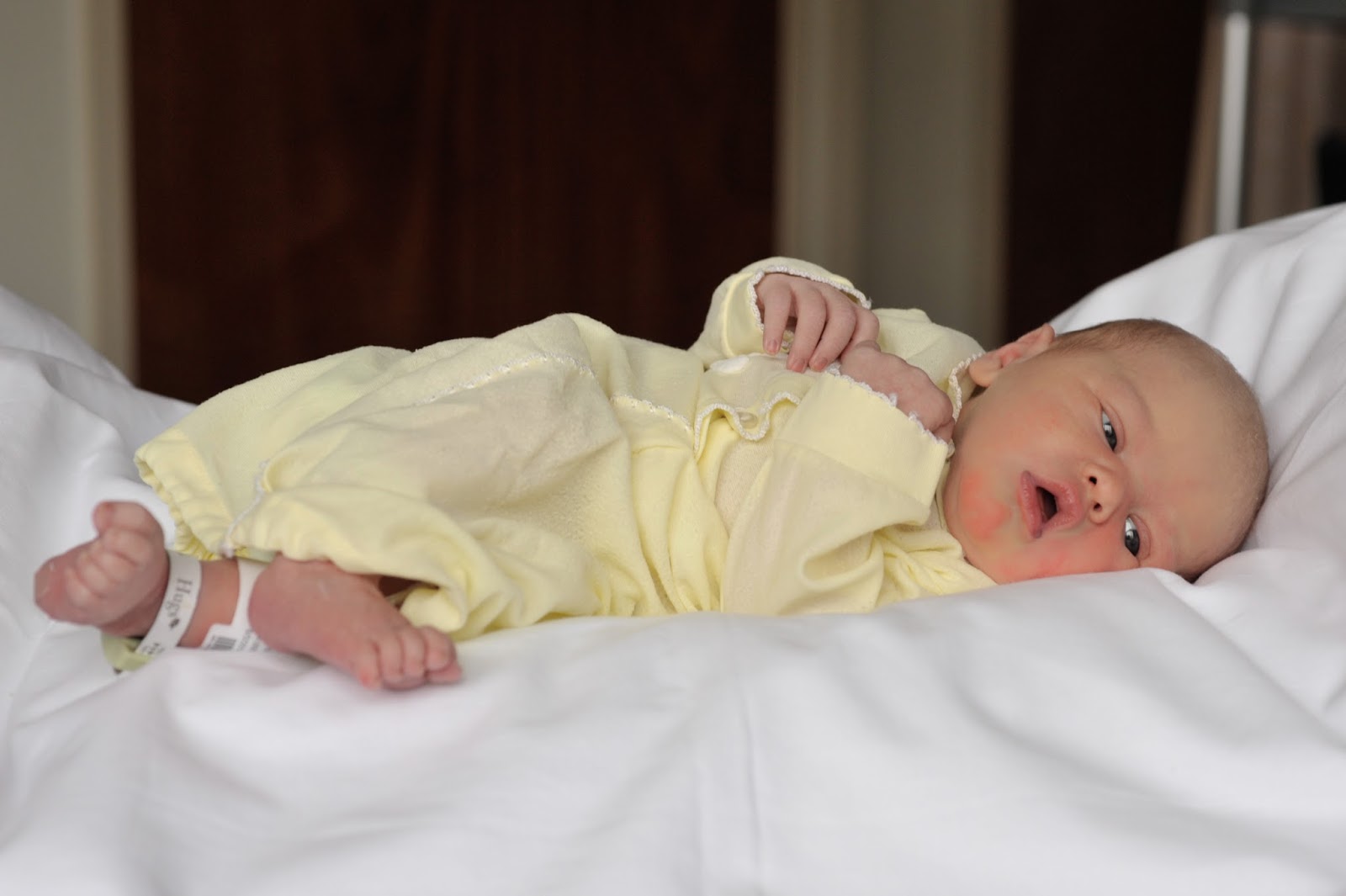
Tess' gown. A few months after I found out that our second child was going to be a girl, my mom gave me a tiny yellow gown with draw string on the bottom. It had a sweetheart collar and a little white bunny embroidered on the front. "It's the gown I brought you home from the hospital in," Mom said. I was touched and surprised that she had kept it. Like me, she isn't a big fan of clutter and has moved half a dozen times since we all lived together in my childhood home. The gown was unisex, as back when I was born parents didn't have the luxury of knowing whether they were having a boy or girl. But it seemed more suited for a girl, particularly because I knew that I had worn it. I packed it in my hospital bag in the weeks before my due date and Dave and I struggled to get Tess' 7 pound, 6 ounce frame into it when the photographer at the hospital came for a photo shoot shortly after she was born. She also wore it home from the hospital, even though her newborn chicken legs kept getting tangled in the draw string. Once home, I tucked it into the bottom drawer of her dresser. A year later, when I was packing up her dresser for our move, I put the tiny yellow gown into the box with the rest of her clothes, thinking that one day, 20-plus years from now, I may pass it along to her to carry on the tradition.

Laurie plaque. Growing up in a suburban two-story track home on Port Margate, with a park down the street and a pool around the corner, I had a little plaque on the door of my bedroom that said, "Laurie." I don't remember where it came from. But there's something about that blue ceramic nameplate, with my name scripted in bold navy letters, that takes me back to my childhood bedroom. I feel the green shag carpet under my feet and see the matching striped green-and-pink patterned wallpaper. I remember the desk in front of the French window that faced the neighbor's house, where one of the teenage boys engaged in ear-splitting drum sessions in their garage while I did my homework. I remember the sliding doors of my closet that held my plaid private school jumpers and my bookshelf filled with swim team trophies -- gold plated swimmers crouched on starting blocks waiting for the gun to go off. I remember the ammonia smell of the Green Out shampoo with the mermaid on the bottle that my mom would use to scrub the green tint out of my sun-bleached blonde hair, the result of the chlorine that saturated the pools I spent entire summers in. I remember Eric's light- and dark-blue checkered wallpapered bedroom across the hall and how he became afraid of his closet after we saw "Poltergeist," and slept with Mom for weeks. I remember slamming my bedroom door so hard during fights with my mom that it came off the hinges. But most of all I remember innocence. 

Cards from Dave. Dave is a good writer. He never wanted me to proofread his papers in law school and doesn't ask me to read the briefs he now drafts for his clients and that's probably a good thing. Best to keep my red lining out of his business. I don't know how well his legal writing flows (or doesn't), but when he puts pen to paper in the cards he writes me for every birthday and holiday, he fills the entire inside and sometimes even the back of the card with his heart. He uses these occasions to reflect on what he's been thinking about and how he feels about us. He confessed long ago that he used to think Valentine's Day was commercial bullshit until he met me. Suddenly his resentment of the marketing industry evaporated, but not entirely, as you can tell from one of the V-Day cards I received a few years ago. A friend of mine who has been married 15 years and has four kids once told me, "First it's about you. Then it's about us. Then it's about them." I can see those shifts in the cards Dave has written me over the years, which continue to serve as a history of the passages of our relationship. These days our life definitely feels like it's about "them" and we often daydream about when it will be about "us" again. The cards Dave buys me are typically blank inside so he can write his own message. They are sometimes from Papyrus or another artsy card maker etched with pretty, whimsical designs. Whenever I receive a new one I say the same thing, "Aw, babe. Thanks." And I give him a hug with tears in my eyes. I keep them stacked in one of the mesh storage containers in our armoire. One day, when I have some downtime, I may read them all in one sitting and reflect on all we've accomplished and overcome together. Probably when I'm old and gray, sitting on a beach in San Diego, where we vow to move the second the kids go away to college.

June 1, 2015

Dear Tess,

When I was 38.5 weeks pregnant with you, I wrote you this letter. I wrote one to your brother when I was at the same stage with him, and I wanted to make sure I did the same for you. Now here we are and you're a whole year old. What a year it's been my sweet, beautiful girl. Where do I start? How about the night you were born.

I was sitting on the couch watching "Driving Miss Daisy" when I started to feel labor pains. It was a Monday night, you were due on Friday and I had sobbed to your daddy earlier that day when he called to check in that I couldn't take another minute of being pregnant. I felt enormous and uncomfortable and I couldn't catch a full breath. When I started to feel bands of tightness in my lower stomach, I felt cautiously optimist, thinking this could be it. It was also a relief to stop watching "Driving Miss Daisy," as I'm pretty sure it's the slowest movie ever made.

Your daddy was working as an associate at his first law firm when I was pregnant with you and he did a lot of drafting late at night. He often pulled all-nighters to put a dent in the crushing amount of work it seemed he always had due. I'd wake up in the middle of the night and realize that he'd never come to bed.

The nights leading up to your birth were no different. He had pulled a series of all-nighters to finish a big appellate brief and I was worried that when I went into labor with you he'd be too tired to make it through. We'd been up for three days straight when I was in labor with your brother. We should have known that you'd be different.

When I told your daddy I thought I was in labor he jumped up from the dining room table, snapped his laptop shut and went straight to bed, trying to grab a nap before we had to head to the hospital. No such luck. Within an hour I was on my hands and knees, rocking back and forth to ease the pain of the contractions and telling him to call his Aunt Rita to come over to take care of Owen, who was asleep in the next room.

It was midnight and given that I was 10 centimeters dilated when I finally went to the hospital with your brother, I wasn't taking any chances. I had heard from many mothers that the second baby comes more quickly. One friend nearly had her second child in the lobby of Northwestern Hospital as they were checking her in. She kept telling them she didn't have time to answer all their questions and they didn't stop and look up from their paperwork until she started to push, right there in the waiting room.

It's a funny thing when you're in labor. It's an all-consuming, urgent experience for you, but for the hospital staff, it's just another day at work. They could not be more unimpressed with the fact that you are about to bring another human being into the world. And that it hurts. A lot.

I remember how surreal it was when your daddy dropped me off in front of the hospital to go park when I was in the throes of active labor with Owen. I took the elevator to the labor and delivery floor, then picked up the red phone outside the locked ward. A voice came on, "Yes?" I informed the voice I was in labor. "Okay, come on in."

The doors popped open and I walked down the longest, loneliest corridor in the history of hospitals to the nurses' station, where two attendants were engrossed in their computer screens. Finally, like I was waiting my turn at the register at Macy's, one of them looked up. "Yes, can I help you?" Um, yes, I'm pretty sure you can.

When we got to the hospital with you, they took us into a triage room right away. The nurse was welcoming and friendly. An episode of "Law & Order" was playing on the TV on the wall in front of the hospital bed, where I tried to find a comfortable position with my heaving belly and bunched up backless gown. I looked over at Daddy and he was staring at the TV screen with a dazed look on his face. He saw me watching him.

"What?" he asked.

I gave him a look. "You're going to fall asleep."

"No I'm not," he said. "I'm getting my second wind."

"Right."

I turned my attention to the triage nurse. "How many centimeters do I have to be for you to keep me here?" I asked. She answered something noncommital. I think all medical professionals are trained to respond to every patient's questions with, "Let's wait and see." But then she checked me.

"You're five centimeters," she said. "We're definitely keeping you." Thank God. This is it.

At first I said I wasn't going to need an epidural because I'd had my first child without one. The triage nurse radioed up to someone on the delivery floor that they could wait on getting the room ready for me as I would labor longer there. But halfway through another episode of "Law & Order," I changed my mind. The contractions started coming faster and harder, a ripping, burning pain that made me yell out.  If I had a headache, I'd take an asprin, so why wouldn't I take something for childbirth? 

"I think I would like that epidural after all," I said.

We waited for what seemed like forever for the triage nurse to come back and take us up to the delivery floor. Finally she appeared with a wheelchair and rushed me to the elevators with Daddy galloping behind as I yelled through each contraction, my "vocalization" echoing through the long, deserted halls. It must have been 2 a.m.

We arrived at a labor and delivery room, where Ashley, my labor nurse, was waiting for us, pushing her hair into a surgical cap. There were no TVs in here. No long list of questions. This was a room where women got down business.

But there was a couch. And as expected, Daddy disappeared. I felt oddly okay about it because I had Ashley, who approached her job like a joint endeavor. Then the anesthesiologist walked in, one of the most handsome men I'd ever seen. This was clearly someone who could make all the pain go away. "He must be the most popular guy in the entire hospital," I told Ashley as she held my shoulders while I leaned forward so he could insert a long needle in my lower back. She laughed.

I progressed quickly. The resident came in and checked me. I was 8 centimeters. Then 9. I could see the contractions on the monitor but I didn't feel a thing. They radioed the doctor on call from my OB's office and she barely made it in time. Two pushes and you were out. No joke. Right before I started to push, Daddy magically appeared by my side. He later told me a nurse had woken him up.

When they handed you to me, we were shocked. We looked at each other, both thinking the same thing. "She's beautiful," we whispered to each other. When Owen arrived, he had looked swollen and beat up. You benefited from that long road trip. He had already stretched out the highway, allowing you to cruise along in the fast lane, sailing through the off ramp with nary a mark. Labor? What labor?

Since that day, you've only grown more beautiful, as if that were possible. You have striking blue eyes, long eyelashes, a button nose and tulip-shaped lips. You also have the softest, most kissable, perfectly shaped head. It's a good thing, because at 1 year old, you're still nearly bald. Yet somehow, like Sinead O'Connor, you pull it off. That and your toothless grin. Yep, still no teeth, despite months of sucking on everything in sight. I'm told through the family grapevine that the Zwaska boys got their teeth late.

The most striking thing about you is that you seemed to have a sense of contentment right from the start. You are someone who can just hang out. Whenever you cried there was a reason, like a multiple choice test: wet, hungry or tired. The moment we addressed the problem, you settled down. What you really liked in those early days was being held. When Grandma came from L.A. to take care of you the first month I went back to work, she watched the entire PBS series on the Roosevelt family with you sleeping on her chest. If you end up having a fascination with the FDR presidential years, we'll know why.

Your brother had mixed feelings about your arrival. At school, his teacher would tell me he talked incessantly about "Baby Tessa." At home he threw Category 5 tantrums whenever I held you and tried to sit on you and tear you from my arms. I felt sympathetic and distraught, being the firstborn myself, but also protective of your limbs. It was rough going for the first four months. Now he seems to have accepted your place in the world. "Mama, Dada, Owen, Tessa. That's my family," he tells me.

That doesn't always stop him from screaming when you grab one of his trains or pushing you over when you're standing in the middle of the room minding your own business, slightly weaving and wobbly on your newfound legs. But we're getting there.

Despite your easygoing nature, you're by no means a shrinking violet. You are clear about what you do and do not want. When you're done with your bottle, you're done. If I try to put it back in your mouth you bat it away, sometimes so hard it flies onto the floor. If you want my phone or keys, you'll keep grabbing at them after I move them multiple times, even across the room. There's no stopping you when you're determined. It's a perseverance that can make parenting exhausting, but a personality trait I know will serve you well.

You took your first steps on Mother's Day, more than three weeks before your first birthday. I knew it was coming because you kept doing odd-looking baby headstands on the living room floor. You would prop yourself up on your head and feet, bending at the waist into an upside down "V." Then using your head as leverage, you would push up through your legs to a standing position. It's one of the more impressive yoga moves I've ever seen. That's one way to do it, I thought as I watched you do it over and over again the day before you walked, working with your body to find the right balance, then slowly rising to your feet. 

My favorite time with you these days is our bedtime ritual, when I feed you, lying in the dark with the white noise machine humming softly. I sit against our headboard, propped up with pillows and your warm body cradled in my lap. My mind wanders as you lean into me and drink your bottle. I rub my hand across the top of your head, playing with the soft fuzz of your hair. I run my finger tips down your baby soft legs and cup your pudgy feet as you flex them against the palm of my hand.

It's in these moments that I wish you'd always stay little, that you never grow hair or lose the roll of fat above your knees. It's the time when you're my Tessie and we're the only two people in the world. Happy birthday sweet girl. And many more.

 Love,
Mama

May 8, 2015

Five things I didn't understand until I became a parent

Like my friend Sandra says, being a parent can feel like living on another planet. No matter how much other parents try to explain it to you before you have children, there is no substitute for the actual experience. Sometimes it's a weightless, joyous moonwalk and other times it feels like you've lost all contact with the space station and you have no idea how to get back to solid ground. Here are some things I've learned in my three years of parenthood.

1. NEVER SAY NEVER. 

A few years ago when Owen was a baby, I was visiting a college friend in La Jolla, a beautiful coastal town just north of San Diego. She and her husband had just finished renovating their home. As part of the renovation, they had remodeled the kitchen into something out of a decorating magazine, complete with a white-and-blue tiled breakfast bar and a flat screen TV. When I came down for breakfast the first morning,  her two boys, ages 6 and 4, were sitting at the breakfast bar eating cereal, their legs danging from the bar stools and their eyes glued to cartoons. I can't believe they have a flat screen TV in the kitchen. I would never let my kids eat in front of the TV.

Dinner time
Fast forward to last summer when Tess was born. Owen started throwing the biggest tantrums I'd ever seen. He'd throw himself on the floor and scream, flailing around for what felt like hours, inconsolable. Any time I picked up Tess to feed or change her, Owen would cry, yank her leg or try to sit on her. I couldn't leave him alone with her for fear that she wouldn't have any eyeballs when I returned to the room. One time, while I was changing her diaper, he wrapped his arms around my legs and yelled, "My mama! My mama!" He was not taking the new addition well. Dave was working long hours and I felt helpless with the two kids alone. Dinner time, after I had picked up Owen from daycare, were the worst times. Before I knew it, I was dragging his high chair from the kitchen into the living room, positioning it right in front of the big screen TV. I let him watch any and all videos he wanted until bedtime.

Since then, he has eaten breakfast and dinner in front of the TV, mindlessly shoveling oatmeal or turkey and broccoli into his mouth while watching Thomas, Mickey Mouse or Clifford. "More milk, please!" he yells from his high chair, holding out his sippy cup like I'm his personal waitress. I acquiesce to his demands because it keeps him occupied and quiet, a very valuable thing. In the morning, it gives Dave and me time to get ready for work. In the evenings, I can get Tess ready for bed, feed her a bottle, sing to her and put her down in peace. So yeah, my kid eats in front of the TV. Maybe it's not so bad. He is an American after all.

Parenting is a huge opportunity for judgment, both of others and myself. I can't tell you how many times other mothers have disclosed things to me like their son will eat nothing but pancakes and add, "I know, I'm a bad mother." No, maybe you're just doing the best you can. I remember recounting to one mom how much harder it was to stay on top of everything with two kids. She leaned in and uttered three words, "Lower your standards." I gasped. How could I possibly do that? What would others think of me? What would I think of myself? These days that matters less and less. More often when I catch myself starting to judge another parent, I stop and think, "Whatever works."

2. WHY MY MOM LOOKED SO TIRED. 

Pregnancy books will tell you that becoming a parent will make you closer to your mother, or at least understand her better. I'm inclined to agree. Before I had children, my mom often complained that she didn't get much help raising me and Eric when we were little. My dad worked long hours at his dental practice. The last thing he wanted to do when he got home was give us baths and read us bedtime stories. In fact, my mom said, dad would come home from work and fall asleep on the couch in the family room, expecting her to keep us quiet until dinner. My grandma, who lived 20 miles away, never wanted to babysit much or take us for the weekend. "I already raised four children," my mom says her mother told her.

Parenthood: the ultimate ropes course
Through the years, I dismissed these comments as the bitter reminiscing of a divorced woman. I rolled my eyes at her pity party. I didn't want to feel guilty about how hard it was for her. I remember the tightness in her mouth and the slump in her shoulders whenever I would "back talk" as she called it. I remember standing at the top of our yellow carpeted stairs when I was a teenager yelling down at her while she yelled up at me from the bottom. I don't remember what we were fighting about. But like most smart kids, I knew exactly what to say to push her buttons and took great satisfaction in watching her lose it.

Owen's not even three yet and his version of back talk is already emerging. The other morning before work I was frantically vacuuming up a weekend's worth of crumbs embedded in the living room rug before the family we share a nanny with came over with their baby. Owen walked over to the electrical outlet, put his hand over the plug to the vacuum cleaner, poised to pull it out of the socket. He looked over at me, grinning, his eyes saying, "What are you going to do about it?" Negotiating with him in these moments is like being in a hostage situation. I have to remain calm and talk him off the edge of naughtiness without pleading or yelling. It's a delicate balance, one I get to practice often.

3. SLEEP TRAINING IS AN ONGOING PROCESS. 

Of all the things my mom struggled with in raising us, lack of sleep was never one of them. In fact, she told me recently, when I was four months old, someone told her I was old enough to sleep through the night without eating and to just give me a pacifier. So she did and I began sleeping through the night. Done. End of story. She may be right. Maybe I was a miracle baby. But that is not my experience or the experience of the sleep-deprived new parents of my generation who swap sleep training tips like a valued commodity. Owen was six months old before he stopped waking up once or twice a night. Tess took even longer. All the sleep training books make it sound as if you let your child cry themselves to sleep one or two nights in a row, they'll start sleeping through the night forever. It's something you can do in a weekend. Done. End of story.

Victory
Bullshit. With Tess, I would rock her to sleep, then put her down in her crib ever so gently, sneaking out of the room like a cat burglar. Seconds after I put her down, she would start wailing. So I'd pick her up and we'd go through the bouncing, singing, rocking, put down, wailing routine again and again. It got so ridiculous that I became willing to let her cry it out, something I wasn't willing to do with Owen. He was my first born and it didn't feel right to let him cry, no matter how much the books reassured me we weren't emotionally scarring him. That he needed to learn to "self soothe" and "rapid extinction" was the best thing we could do for him, for ourselves, for our family.

Tess got the Ferber method. I would hold her, sing one song, put her down in her crib and walk out. She would scream. I would watch the clock from the other room. By 10 minutes, she usually settled. But it took nearly a week of listening to her scream at every nap and bedtime before she would roll over when I put her down and go to sleep without a peep. The first time it happened, it felt magical. Like the sleep angels had finally descended. But it didn't last. Sometimes, at 11 months, she still cries when I put her down, other times she doesn't. Sometimes she'll sleep through the night, no problem. Other times she wakes up wailing, like last night at 3 a.m. It's much better than it was but there's no done. End of story. Not even with Owen.

The human boomerang
When that little bugger climbed out of his crib a year ago and we converted it to a toddler bed, he became a human boomerang. He would come into our bedroom five or six times a night, no matter how many times we got up and took him back to his bed without talking, just like the Super Nanny advocates. A year later, he does it less but it still happens. This morning he climbed into bed with us at 5 a.m., completely naked. That's his new thing. Taking off his diaper and pajamas in the middle of the night, then peeing all over his sheets and comforter in his sleep, even his pillow. Like I said, parenthood is like living on another planet. Sometimes a very wet planet.

4. TODDLERS CAN'T SHARE. 

In the winter, we take Owen to an indoor playground called Little Beans Cafe. It has slides, a kitchen with plastic vegetables, shopping carts, a fire house, toddler-sized cars, puzzles, and couches and a coffee bar for parents. In a word, it's bedlam. But the real action happens at the train table, where toddler boys push trains around the wooden tracks and take turns snatching them from each other. Screaming and crying ensues, as one boy cradles the coveted train to his chest as the other boy tries to pry it out of his hands. Parents intervene, imploring the chest cradler to turn it over. "You've had it long enough, Ryder. Now it's his turn." Ryder looks at his mom without loosening his grip. "It's okay," the dad of the prier will say. "Charlie, it's his turn right now. You need to wait." "No it's not okay," Ryder's mom will say. "He needs to learn to share."

My trains!
Share. Share. Share. You will hear parents throwing that word around constantly at playgrounds, playgroups, play dates and anywhere else toddlers gather. They'll huddle over the two tiny combatants, trying to negotiate a peace treaty by explaining the concepts of selflessness, generosity and compromise ("You can play with it for five minutes, then he gets it for five minutes"). But these are concepts that toddlers' brains have no way of comprehending. Blame it on the prefrontal cortex, that part of our brain that specializes in problem solving, social awareness and overriding impulsive behavior. It's not fully developed until we're well into our 20s. And yet we expect 1, 2 and 3 year olds not to grab whatever they want, whenever they want it.

When Owen gets a train snatched from him, he'll look over at me. I'll shrug my shoulders, raise my eyes as if to tell him, "It happens." The mom of the snatcher will apologize to me and try to return the train. "It's okay," I'll say. "He snatched it from someone else five minutes ago." And so it goes. When Owen's being particularly grabby, I'll watch him stockpile his stolen goods, then ask him, "Okay, which train can he play with?" He invariably turns one over without me mentioning anything about sharing.

I think the real reason we're so intent on discussing sharing with toddlers is for us, not for them. It's because we, the parents, have fully developed prefrontal cortexes. We know it's rude to grab something out of someone else's hand even if we desperately want it. We worry what the other parent will think of us if we let our kid do it. I know I do. I don't want anyone to think I'm not a properly socialized, responsible parent. I sometimes wonder, however, what would happen if we weren't so quick to intervene and insist on sharing? Would it turn into Lord of the Flies? Or would one kid lose interest and find something else to play with?

5. POTTY TRAINING WOULD BECOME ONE OF MY GREATEST LIFE ACCOMPLISHMENTS. 

It's no small thing to get someone to stop pooping in their pants. I mean really. It's just so convenient. They don't have to stop what they're doing and someone else cleans up the mess. I've graduated from an Ivy League school, won awards for my reporting and relocated to numerous cities where I didn't know anybody. Yet nothing felt quite like the accomplishment of getting Owen to go pee pee and poo poo in the potty. I wasn't even considering potty training when I struck up a conversation with a mom at a nail salon who told me over pedicures that she had discovered the best potty training method ever. She had just used it on her son, who was 2 years old.

A toddler classic
"How old is your son?" she asked. "Almost 2 and a half," I said. "We've got plenty of time." Owen had started talking about poo poo around his second birthday. He would tell us right before he started going in his diaper. So I consulted our parenting book but it said not to start potty training until he was three, so I dropped it. Until now. "Actually," the mom said, "the later you wait to potty train him, the harder it gets. And boys aren't harder to potty train than girls. That's a myth." That was news to me."You should check it out," she said. "It's called 'Oh Crap' and it's a PDF you download from the internet for $10. It's written by a mom who does this for a living. It's an easy read and she's funny." I decided to look into it. Immediately.

While reading "Oh Crap," I realized this whole potty training thing required a big commitment from the parents. The author, Jamie Glowacki, made that clear. What's the biggest factor in whether or not your child gets potty trained? You. So if you're not all in, don't do it. There's no putting the diapers back on. Jamie didn't believe in rewards or waiting until your child "seemed ready" either. This was about socialization, pure and simple. Teaching them that pee pee and poo poo go in a specific place. And like most of the parenting techniques that resonate with me, it was about being calm and consistent. No freaking out when he had an accident on the carpeting. You clean it up and calmly remind him, "Poo poo goes in the potty, not on the floor."

To undertake this challenge, I had to take some days off of work. Yes, working parents, Jamie said, this is going to require your undivided attention. But the time and money you save later will be worth it. So I did. Over a long weekend in December, I spent the first day at home with Owen totally naked, doing nothing but playing trains with him and noticing his body signals when he had to go so I could prompt him to use the potty. Day 2 I put a shirt on him. Day 3 he got sweatpants too, but no underwear for another three weeks, as those can feel too much like diapers, and cause him to have accidents.

He had plenty of accidents. So many that it seemed like he would never get it, even though we brought his little blue potty everywhere we went while in LA over Christmas vacation. We stopped to let him pee in parking lots. We brought the little blue potty to Christmas parties. We prompted him to go before we left the house and whenever we arrived at our destination. Slowly but surely he began to get it. He was so proud of himself. "It looks like a snake, Mama!" he would yell. "It looks like a snake!" I cheered and clapped and agreed with him. "It sure does! Good job!" I had no idea that poop could be so exciting. It's one of the many things I didn't understand. Until I became a parent.

February 8, 2015

Lessons from a family funeral

PART 1: THE NEWS

It's been awhile since I've had a chance to blog. Four months to be exact. I have written dozens of posts in my head since then. Topics run through my mind as I'm walking, driving or folding laundry but evaporate quickly, as I don't have the time to write them down because I lack two crucial ingredients: peace and quiet.

It is harder with the second child. Somehow when it was just one, I still felt like I could juggle everything. I could pass off Owen to Dave when I needed to work late, balance the checkbook, go to yoga, or have phone conversations that lasted longer than five minutes. Now, with two of them, getting everyone out of the house with shoes on, jackets zipped and the diaper bag packed feels like it takes an act of Congress, as British comedian Michael McIntyre so brilliantly illustrates in this sketch.

Tonight I have some peace and quiet, nine hours to be exact, as I'm on a plane thousands of miles above the earth on my way to Munich to attend a business conference. I've never been so excited about a transatlantic flight, as I typically prefer the destination to the journey. Tonight it feels luxurious to sit alone in the dark with only the glow of my laptop to keep me company. Finally I have time to sit, reflect and think about my grandma, who died a few weeks ago, 18 days shy of her 97th birthday.

When my mom called from Los Angeles to tell me Grandma had passed away, it was 9 a.m. in Chicago. I was in the throes of shoving work papers into my bag, finding socks for Owen and slamming coffee so I could get him to preschool and myself downtown to my office. The first time I saw my mom's number light up on my phone, I didn't answer. But then she didn't leave a message, which is unusual. And she never calls that early. So when she called back the second time, I picked up.

"Laurie?" Mom said. 

"Yes?"

"Your Grandma Green died last night," she said. "She went to the hospital for a kidney issue and didn't make it."

I stopped shoving things into my bag and looking for socks for Owen. It had been a long time coming, given her age and health issues. Yet the news that she was gone, really gone, still came as a shock.

"Oh," I said.

PART 2: THE GRANDMA I KNEW

Margaret Green was my last living grandparent, most of whom lived into their 90s. She grew up in Baton Rouge and brought a Southern flavor to grandmothering. "Come here and give me some sugar," she would say with a slight drawl, her arms outstretched to pull me into a fierce hug. She called black people "coloreds," no matter how often Eric and I corrected her and she was forever busy perfecting her role as a 1950s housewife, whether it was wallpapering, cross-stitching or cooking a big pan of homemade Mac 'n cheese — Eric's and my favorite.

Margaret Carter Green
She poured us glass after glass of "purple juice" (grape) and kept a stock of Vanilla Wafers in a cabinet above the stove that I used to scale the counter to get to. She also stashed Doublemint gum and butterscotch candies in a kitchen drawer I would raid during visits to her house on Havana Avenue, whose rooms I knew as well as those in my own childhood home.

Even now, I can picture the back patio where she and Grandpa used to relax with rum and cokes during summer afternoons, the screened back door that thwacked behind you as you entered the kitchen, and the den where Grandpa would sit playing solitaire, turning cards over three at a time, hour after hour, while watching golf on TV, a pastime I found incredibly boring.  

I remember the long table in the dining room where we gathered for holiday dinners that we were never allowed to start eating until Grandma took her seat at the head of the table, picked up her fork, peered at our faces and asked, "Is everybody happy?"

I remember the staircase that led to the second floor, where the first stop was the bathroom where Grandpa used to hack himself awake every morning, the result of emphysema caused by a smoking habit he had acquired as a Navy officer during World War II.

Past the bathroom was the guest room with floral wallpaper, lace curtains and black-and-white headshots of my grandparents' four children in oval frames along the wall (my mom was third in the lineup). That's where I used to sleep when I stayed over, my grandma stroking my eyelids to soothe me to sleep when she tucked me in tight at bedtime.  

My grandparent's house on Havana Avenue
Across the hall from the guest room was my grandparents' room, with two twin beds pushed together, Grandma's closet overflowing with shoes, freshly pressed slacks and silky dresses and blouses (she loved to shop, to say the least) and a sitting room where they kept one of those inversion therapy contraptions popular in the 1980s for relieving back pain.

The contraption looked like a flat, vertical lawn chair that you strapped yourself into and leaned backwards to turn upside down. Eric and I were too young to suffer back pain, but that didn't stop us from flipping upside down and watching each other's faces turn beet red, giggling as our toes tingled. (For a visual of a modern-day version, go here.)

This is all to say that my memories of my grandma are fond ones, and as I sank into my seat on the El after dropping Owen off at school the morning Mom called with the news, I felt my eyes well up with tears. I quickly brushed them away, afraid that my fellow commuters would see them. I didn't have time for this. I had a huge deadline at work. I could cry about this later. Come on Laurie, compartmentalize. But the memories kept coming.

PART 3: THE LESSONS

I wasn't just crying because I loved Grandma and would miss the special bond we shared. She was the one who was convinced I'd become a writer, no matter how much I dappled in other careers and screwed around after college. "You were a favorite," one of Grandma's cousins whispered to me at Grandma's funeral, clutching my hand from her wheelchair and pulling me close so I could hear her.

Grandma, age 1 
I was also crying because in many ways, my grandma was a tragic figure. She was a wonderful grandma, everything I could have ever wanted. But as a mother she had shortcomings that she never seemed able to overcome. I attribute those shortcomings to a lack of nurturing that she suffered as a child, the heavy dose of Southern Baptism that was heaped upon her, insecurities about growing up working class and a general lack of self awareness common among her generation.

Yet no matter the cause, she had been estranged from all three of her living children at one period or another, particularly my mother. Just months before she died, Grandma turned to my sister-in-law, Sonnet, at Thanksgiving and asked, in her halted speech belabored by a series of strokes, "Why…does…Marty…hate…me…so…much?"

So as I sat at Grandma's funeral, with Sarah McLachlan's "I Will Remember You" playing as attendees dabbed their eyes with tissue and gazed at Grandma's portrait, I reflected on her life, her struggles and the lessons I could learn from them.

What I'm about to say is not meant to tarnish her reputation or minimize her many positive qualities, as I have great compassion for my grandma. I write this as a daughter who often struggles to accept my own parents, and as a parent whose greatest desire is to stop the legacy of pain that seems to pass down from generation to generation, albeit in different forms and flavors. 

Lesson 1: Don't play favorites.

Born in 1918, Grandma was the oldest of two girls. During her funeral, her younger sister Florence, now 94, stood up and tried to explain why she and Grandma had been staunch rivals throughout their lives. There was so much animosity between the two sisters that they didn't speak for decades, and their children (my mom and her three siblings) and Florence's seven children didn't grow up playing together or sharing holidays, despite living in the same city of Long Beach, California.

Grandma and Florence
It wasn't until my grandpa died in 1996 that Florence and Grandma reconciled, realizing that their issues were largely orchestrated by their parents. Grandma had been her father's favorite, a daddy's girl. So when Florence came along, their mother, Lillie, worried that he wasn't giving Florence enough love and attention. She compensated by favoring Florence and becoming highly critical of Grandma. Competition and bitterness between the sisters ensued. So did Grandma's lifelong feud with her mother.

My grandma then perpetuated that bias by aching for a son. She had three daughters, one after another, and was convinced it was punishment for some sin she had committed (remember, she grew up Southern Baptist). So when my Uncle Charlie was finally born, it was cause for great celebration. My mom, being the third girl, suffered the brunt of it.

Mom remembers, for example, begging her parents for a car because they had moved across town when she was a senior in high school and she would have to ask friends to give her rides to school and the many activities she was involved in. The answer was no. A few years later, when Charlie turned 16, my grandparents told him they would buy him a car if he maintained a C average (my mom was a straight-A student). Even when he failed to make his grades, he got a car anyway.

I realize this double standard was common back then and in many ways, continues today. But I can't emphasize enough how damaging it is for parents to fan the flames of jealousy among their children, pitting them against each other with favoritism and unequal treatment.

Lesson 2: Stand by your children.

One of the most painful things Grandma had to do in her life was turn over custody of her firstborn child, Joanny, to the state of California. Since Joanny had been born, there was clearly something wrong. At 2 months old, she started having five to six seizures a day, for reasons the doctors had difficulty discerning.

As the seizures continued, Joanny became more mentally disabled. My Aunt Janet remembers Joanny spending hours rocking back and forth while watching TV at their grandparents' house. In the grainy black-and-white family videos I've seen, Joanny marches back and forth in front of their childhood home like a soldier, expressionless. My mom, a toddler, plays with dolls on the front lawn nearby.

Joanny, Marty (my mom), Charlie and Janet
By the time Joanny was nine, my grandma was struggling to care for three other children. Janet was 6, my mom 5 and Charlie was less than a year old. Joanny became too much for her to handle so she and Grandpa decided to have her committed to a children's hospital, which meant turning over custody to the state.

This being 1950, there were few options for parents with disabled or troubled children. But Grandma's parents never forgave her. As good Southerners who believed in taking care of their own, they thought it unconscionable that a mother would give up her own child. They stopped speaking to Grandma and cut off contact with their grandchildren, even though they lived next door.

"Wait, so since you were six years old, you were never allowed to go over to your grandparents' house again?" I recently asked Aunt Janet.

"Yes, sometimes we could hear our cousins playing in their yard but we couldn't go see them," Janet said. "Doris and Frank would come to our front door to ask if we could play, but Mom would say no."

"How long did you live next door to your grandparents after they stopped speaking to you?" I asked.

"Mom and Dad moved to the Havana house when I was in college and Marty was a senior in high school," Janet said. "So it must have been 15 years."

"Fifteen years!" I said. "Why didn't you move away earlier?"

"Housing was difficult to come by back then," Janet said. "You couldn't move around like you can now."

"Wow," I said. "Even if Lillie and Ollie disowned Grandma, I'm surprised they ignored their own grandchildren."

"I know," Janet said. "They did give me and Marty electric typewriters when we graduated from high school."

Ouch.

Joanny died of kidney failure in the children's state hospital at age 16. Before Joanny's death, my mom remembers visiting her with the family and taking her out for picnics on weekends. Yet I don't think Grandma ever got over having a "defective" child or the shame that was compounded by her parents' harsh reaction to her difficult decision to give up custody.

Lesson 3: Do not remain friends with your children's exes.

This was the fatal mistake that Grandma made with my mom, and the reason that Mom ultimately cut off contact with her around the time I graduated from college. The tension started when my parents separated when I was 10 and Eric was 7. My grandma sided with my dad, even though she and Mom had seemed close and we saw our grandparents often, as they lived just 20 miles away.

My mom says Grandma told her things like, "I know how difficult you are to live with." And even before my mom filed for divorce, whenever she appealed to Grandma for support about their marital conflicts, Grandma's advice amounted to, "Boys will be boys" and "You have a lovely home, a nice station wagon and two beautiful children in private school. Go clean out the refrigerator."

After Mom filed for divorce, my dad fought for sole custody, a move that shocked my mom because she had always been our primary caretaker while Dad focused on his career (my mom will tell you ad nauseam how he never changed a diaper, gave us baths or read us bedtime stories). Throughout the custody battle, Grandma seemed to side with Dad. Why did she do this?

Grandma and her "Berkeley man"
Here's my best assessment, based on what I know now and what I remember from a period that was disorienting to say the least, when it felt like the world had turned upside down and the adults I depended on suddenly went insane. Things I took for granted, like the fact that I was safe, that my parents would protect me and had my best interests in mind, seemed uncertain because they were so engaged in warfare with each other.

We were all living in this alternate universe of hurt, fear, anger and confusion and I think Grandma got swept up in it. She had always liked and admired my dad, a handsome, charming, ambitious dentist who fit the mold of the type of man she would love her daughters to marry. Because of her humble upbringing as the daughter of a restaurant owner who never went to high school, Grandma had always been in awe of status and determined to move up the social ladder.

Marrying my grandpa, a "Berkeley man" who came from a wealthy family, helped. So did the many junior leagues, charity groups and committees she joined, as well as her trips abroad, expensive jewelry and the shiny gadgets she loved to acquire. Having a son-in-law who was a doctor only completed the picture.

My mom was the opposite. She was an introvert, more practical and fiscally responsible. She was smart and beautiful, but also a homebody who wasn't big on parties and pomp and circumstance. Until the divorce, I think Grandma and Mom got along well enough as mother and daughter, but it was a tenuous bond, given their personality differences. So when crisis struck, Grandma gravitated towards Dad. Despite the circumstances, I don't think she wanted Mom to divorce him.

My parents, 1967
Throughout the divorce proceedings and for years afterward, Grandma and Dad maintained their friendship. Grandma and Grandpa would go out to dinner with Dad and his new wife, Suzi, and spend holidays with us at Dad's house. They still saw my mom, yet whenever they got together, Mom says Grandma would talk incessantly about Dad and what he and Suzi were up to. When mom asked her to stop, Grandma responded by saying, "I always have to walk on eggshells with you."

Years later, I asked Grandma why she turned away from her daughter at such a critical time, when she was in so much pain over her troubled marriage, facing the prospect of going back to work to support two young children and getting hit with criticism on all sides from my Dad, his parents and her own parents for breaking up the family.

We were sitting on the floor in my Grandma's bedroom in her oceanfront high-rise that she had moved into after Grandpa died. I had just finished reading some letters that had fallen onto the floor when I was getting something down for her from the top shelf of her closet.

The letters were from my dad and his father to my mom, basically pleading with her to reconsider "for the sake of the children." Reading the letters, I had a visceral sense of Mom being ganged up on. I felt the heat of anger in my chest as I realized the extent to which her own mother had failed to support her.

"She was hurting and alone," I said. "You betrayed her."

"It was a different time then," Grandma said, barely meeting my eyes. "And I was afraid of losing access to you kids."

"Us kids?" I said. "How would you lose access to us? Mom got joint custody. You could have seen us at her house."

Our family in 1981, two years before the divorce
Grandma sighed and didn't answer. It didn't make any sense. A lot of things didn't back then.

So here's what I've learned from this one. When your child, no matter how old, breaks up with a boyfriend, girlfriend or spouse, don't stay friends with the ex. Don't call them on the phone, go out to dinner, visit them, or ask them to speak at your husband's funeral (Yes, Grandma asked Dad to say the eulogy at Grandpa's funeral). 

I don't care how much you've shared over the years or how much you like them. This is someone who hurt your child, sometimes deeply. You need to get that. And respect it, no matter how messy the circumstances. It's called loyalty.

Sure, be cordial if you see him or her at family gatherings, send a brief note if you hear they've suffered a death in the family. But unless your child and the ex are on extremely good terms, don't be too friendly. Just don't. Otherwise you risk wandering around for years wondering why your child doesn't speak to you anymore, no matter how many people try to explain it to you.

Lesson 4: You don't always know what's best for your children.

When my Aunt Janet and her college boyfriend came home to announce they were engaged, Grandma ran out the front door sobbing. Janet's boyfriend, Pete, was Catholic. This was apparently a big problem. Growing up Southern Baptist, Grandma wasn't allowed to play cards, go to dances or associate with the Catholic girls who lived across the street. These were difficult rules for Grandma, being a social butterfly, but her mother was insistent. Even though Grandma left Louisiana with her family when she was 14 to move to Arizona, then California, she apparently took her Catholic bias with her.

Prior to this outburst, Janet says she and Grandma got along well. She remembers coming home every day from school and sitting on a stool to watch Grandma make dinner while she recounted the events of her day. But once Janet announced her decision to marry Pete, that changed everything. Grandma stopped speaking to her and she later learned that Grandma had gone to Pete and told him that Janet had mental problems in an effort to dissuade him from marrying her.

Janet and Pete, 1967
Besides being Catholic, Pete wasn't flashy or gregarious, which probably didn't appeal to Grandma either. He was on the shy side, a salt-of-the-earth type of guy as solid as his big-boned German heritage with an understated, wry sense of humor. After he and Janet graduated from UCLA, he joined the military and they moved away to North Dakota and then Florida, where Pete became a high school English teacher who coached baseball and football in a small town outside of Jacksonville.

Over the years, Janet and Grandma reconciled, but it was a bumpy ride considering that Grandma viewed Janet's marriage as "Pete taking Janet away from me." When Pete and Janet had children, my cousins Erin and David, Grandma and Grandpa didn't make much effort to visit them, despite their many trips to Europe, Asia, and other far-flung places. That hurt Janet, who wanted her children to be close to their grandparents. In my mind, this was an extension of Grandma's inability to accept the person Janet had picked to share her life with.

But here's the thing about Pete. He was perfect for Janet. Of all the marriages in my family, theirs was probably the healthiest. Of course it wasn't perfect, whose is? Janet says when she could tell that Pete was mad at her, she would look at him and say, "Is it worth it?" And when they were both retired and at home all day together, they would go to separate ends of the house and do their own thing for a few days until the tension subsided.

All you had to do was spend a weekend with Pete and Janet to see that they honestly liked each other. Watching my parent's marriage dissolve into animosity and heartbreak, I was particularly sensitive to couples who seemed at ease with each other. I didn't spend much time with Pete and Janet growing up, as we lived in California and they lived in Florida. But later in my life, when I became a reporter, I visited them during the two years I worked for a newspaper in Miami.

During this time, Pete took an interest in my writing and used to send me emails praising my use of dialogue and description in my news stories. He became one of my biggest fans and most devoted readers, given our common appreciation of storytelling. In those emails, he would provide updates on what he and Janet were up to on Lake Asbury, referring to my aunt as "Old What's Her Name" and joking about how he couldn't get her away from her computer long enough to feed her anything, which was why she was so skinny.

My cousin, David, and Uncle Pete six months before he died  
When Pete died of cancer three years ago, I was pregnant with Owen and couldn't make it to his memorial. I'm sure I sent Janet a sympathy card, but I got so engrossed in my own life that she and I didn't have a chance to talk about the events leading up to Pete's death or how she'd been coping since then, until Grandma's funeral a few weeks ago.

She cried as she told me how much she missed him, and I cried right along with her, especially when she told me that after he had died, she found a document on their computer called, "Wisdom if any from Pete Campbell to his son."

It was a letter Pete had written to my cousin, David, when he knew that he was dying, a list of 12 life observations. Janet's voice caught in her throat as she told me one of them was, "Your mother was the best thing that ever happened to me."

I cried even harder when she told me that, thinking to myself, Can you imagine being the best thing that ever happened to someone? And I was so touched that this was something Pete was writing to his son, man to man. Janet later shared the letter with me, and I got to see that what Pete had said about Aunt Janet was even better, and wiser than the sentiment about how special she was to him. This is the full entry from wisdom item Number 6 of Pete's letter:  
Your mom has been the best thing in my life. But it was pure luck that we met and got along at first. Moral:  Don’t control or manipulate the spouse. The most amazing thing I’ve seen is how your mom has grown, changed, and become an even better companion through her own efforts—not mine.
Here are a few other of my favorites from Pete's letter:  
1. Giving and showing your children how to give is the most important gift to teach. The problem is every parent wants to give to his children rather than make them earn and appreciate it. You were lucky: we didn't have much money to spoil you. 

4. Troublesome bosses, relatives, associates all go away in time. Remain focused and ignore negative people. Most of the time you will get a better job that takes you away from problematic people. The rest of the time, they get fired. 

8. Hemingway said that courage is grace under pressure. The fewer excuses you make, the better you become at developing courage. I still make a lot of excuses but every time I deliberately say, "No excuse" to myself, I feel a little stronger.
Pete ends with this one, which beautifully sums up the importance of putting your biases aside and trusting your children's decisions. In his humble way, Pete demonstrates the grace with which he approached his children:  
12. Rereading these items, I realize you already know 90% of them. See what you can add. I’ll bet you have some incredible ideas. 
Lesson 5: People hurt you because they're hurting.

One of Grandma's many hobbies was genealogy. She would spent hours searching online and going to the library archives in various cities tracing her family's heritage, along with the lineage of Grandpa's family and my dad's relatives. I remember her printing out black-and-white photos on her ink jet printer of stout, fierce looking German women holding tiny baby bundles and explaining to me who they were and how they had come to America.

For the most part, I found Grandma's obsession with our ancestors tedious and grew tired of listening to her recount her latest findings. Being in high school at the time, I didn't see how these fierce looking German women had anything to do with whether I'd get a date to the prom or make the varsity soccer team.

Grandma and me, somewhere in my 20s
But one thing Grandma said during that time has always stuck with me. She said the mothers and daughters in our lineage had a long tradition of difficult, strained relationships with each other. It was certainly true of Grandma and her mother, and of her and my mother.

"You are going to be the one to break that pattern," Grandma told me.

I remember being surprised by that comment, as I was only 16 and having plenty of run-ins with Mom about curfew and whether I'd been drinking. How was someone like me, with ratted bangs, blue eyeliner and a compulsion for eating all the carbs in the house when no one was looking, going to change the course of history?

That was the thing about Grandma. She seemed clueless about so many things, oblivious to her many blind spots about how her actions contributed to the turmoil in her relationships, and yet she would make these declarations that demonstrated her unequivocal love, faith and confidence in me.

So here comes the hard part. How do I keep my parents, my spouse, my children and pretty much anyone in the soft focus that keeps resentment from building? How do I remember that when people are unkind, critical or clueless, that it's likely the result of their own pain or limitations, which have nothing to do with me? And how do I keep myself in that same soft focus while reminding myself, as Uncle Pete suggests, "No excuses"?

Therapy has helped, as has hours spent in 12-step meetings and holding out for the right person to marry after what my friend, Filip, refers to as my many years of "stupidly dating." (The good news: Filip, my parents and even Grandma approve of my husband, Dave, despite the fact he grew up Catholic.) 

Having children has also helped me develop greater compassion, as I understand first-hand what an imperfect science it is to raise them, how challenging it can be to fulfill their needs, and why my mom often looked so damn tired.

PART 4: THANK YOU, GRANDMA

I sometimes wonder what my life would have been like if my parents hadn't gotten divorced and upended my life at the tender age of 10 with joint custody, new partners and ongoing power struggles. Today I look at them and can't image how these two people fit together. Yet if they had managed to have some kind of workable union, would I still have developed an eating disorder? Struggled with depression and anxiety? Spent so many years stupidly dating?  

Along those same lines, what would Grandma's life had been like if her mother had been kinder? Joanny had been healthy? Her parents hadn't disowned her? Would she had been better equipped to support her daughters' choices? Love and understand them? Recognize her shortcomings? Take constructive action?

Dec. 2014: Grandma meets Tess 2 weeks before she dies
I guess it's a futile exercise to even ask these questions, given that life is what it is and we'll never know who we would be without the adversity we suffer. I just can't help but wonder, given how young Grandma was when she took some hard hits, and the reverberations that sent through the family. It was such a different time back then, with such an inferior level of social consciousness and woeful lack of resources and support that we have easy access to today. I can't help but think, "If only…"

For me, Grandma was a loving force. I enjoyed her company. I cherished her encouragement. I benefited from her generosity. As I grew older, I saw how she was sometimes her own worst enemy and understood how much she had hurt my mom. I learned to straddle the line of loving and accepting her, and staying out of a battle that wasn't mine. It's with great sadness that I say good-bye.

Thank you, Grandma, for all that you taught me and how much you loved me. I will miss you. I hope I continue to make you proud.